
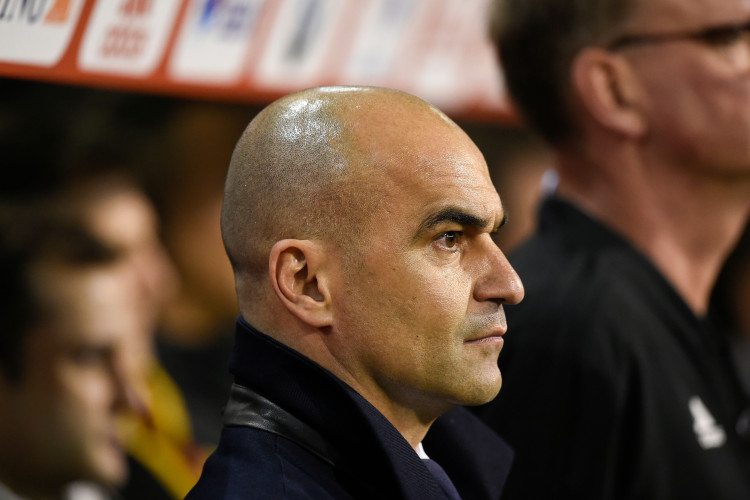
A glamorous international friendly takes centre stage in Mexico City this weekend as Mexico welcome Portugal to the newly reopened Estadio Banorte.
There is already enough intrigue in this matchup without the added backdrop of the venue itself. This will be the first major match at the stadium since its long redevelopment ahead of the 2026 World Cup, giving the occasion an added sense of ceremony. But beyond the symbolism, this is also a serious football test for two sides who believe they can make noise this summer.
Portugal arrive without the sport’s biggest global draw, while Mexico step into one of their most high-profile home friendlies in recent years with momentum beginning to build. Much of the pre-match conversation has naturally centred around the absence of Cristiano Ronaldo, whose hamstring injury has ruled him out of the trip.
That changes the atmosphere around the fixture and undoubtedly removes some of its global spectacle, but from a footballing standpoint, Portugal remain a formidable side. In truth, Roberto Martinez’s squad is now built to function with or without Ronaldo.
The veteran forward still delivers goals and remains a decisive figure when available, but Portugal’s attacking identity has evolved. They now possess enough technical quality, creativity and midfield control to dominate games through collective superiority rather than sheer star power.
That was evident in qualification, where Portugal topped their group with authority and produced some devastating attacking displays along the way. Even in the absence of Ronaldo in their final qualifier, they dismantled Armenia with ruthless efficiency, underlining the depth and flexibility within the squad.
More broadly, Portugal have lost just twice in their last 16 internationals and continue to look like one of the more complete teams heading toward the World Cup. Their squad depth is elite, their midfield remains among the strongest in international football, and their tactical adaptability under Martinez gives them multiple ways to control a match.
Mexico may not have the same global star pull, but they come into this contest with reasons for genuine optimism. Since lifting the Gold Cup in 2025, Javier Aguirre’s side have used a demanding run of friendlies to recalibrate and experiment. The early results in that stretch were mixed, and at times concerning, but there are now signs that the team is settling into a clearer rhythm.
Back-to-back narrow wins over Panama and Bolivia helped restore confidence, but it was the emphatic victory over Iceland that really suggested something more substantial may be taking shape. Mexico looked sharper, more assertive and more coherent in possession, exactly the kind of progression Aguirre would have wanted to see with the World Cup on the horizon.
This match now offers an ideal benchmark. Portugal are a different level of opponent, but that is precisely why the occasion matters. Mexico need these fixtures to gauge where they truly stand against nations who expect to go deep at major tournaments.
The setting should also help. Playing in front of a home crowd in Mexico City, in a stadium carrying such emotional and historical significance, could give El Tri the kind of edge that often elevates their performances.
Mexico are likely to approach the contest with intensity, especially early on. Expect them to press with aggression in spells, look to engage the crowd and try to inject tempo into the match. At home, Aguirre will not want his side to simply sit off and admire Portugal’s technical quality.
Portugal, however, are likely to be more measured and more comfortable in longer possession phases. Their midfield should look to dictate the rhythm, move Mexico around and create spaces through patience and positional rotation. Without Ronaldo, there may be less emphasis on direct final-third service and more on fluid movement, combination play and late runs from midfield.
That dynamic could make the middle third of the pitch decisive. If Mexico can disrupt Portugal’s rhythm and force the game into transitions, they have a real chance of making this uncomfortable for the visitors. If Portugal are allowed to settle into their passing game, they may gradually take control. The Hard Tackle takes a look at how the teams could line up on the night and what tactics they might employ.
For Mexico, Javier Aguirre heads into this high-profile friendly with a squad that is missing several notable names, particularly in midfield and wide areas. Edson Alvarez, Marcel Ruiz, and highly-rated teenager Gilberto Mora are all absent despite having played important roles previously, including in last year’s Gold Cup final, which means Mexico will be without some familiar central options for this encounter.
In addition, Hirving Lozano and Julian Araujo are also unavailable, further reducing the side’s depth in attacking and defensive positions. There are no major suspension concerns reported for Mexico ahead of this clash, so the main selection issues revolve around those absences rather than disciplinary setbacks.
On the positive side, veteran goalkeeper Guillermo Ochoa has returned to the squad for the first time since May 2025 and will be eager to reassert himself as he pushes to be involved in what could be a sixth consecutive World Cup. There is also considerable interest around Alvaro Fidalgo, who is in line to make his senior international debut after receiving his first call-up, adding an intriguing fresh element to Mexico’s midfield options.
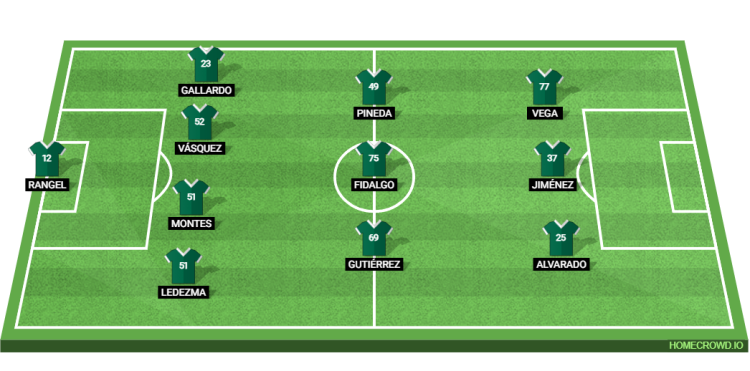
Tactically, Mexico are expected to line up in a 4-3-3 formation, a system that should allow them to stay balanced while also giving them the freedom to attack Portugal with width and pace. In goal, Raul Rangel is expected to start and will have an important role in organising the defence and dealing with the quality Portugal are likely to bring in advanced areas.
At right-back, Richard Ledezma is likely to be deployed and should provide energy and support on the flank, while Cesar Montes and Johan Vasquez are expected to form the central defensive partnership. On the left side, Jesus Gallardo is likely to start and will be tasked with contributing both defensively and offensively, especially if Mexico look to push forward in transition.
In midfield, Brian Gutierrez, Alvaro Fidalgo, and Orbelin Pineda are expected to form the central trio. Gutierrez should offer composure and positional discipline at the base of midfield, while Fidalgo will likely be asked to provide technical control, line-breaking passes and progression through central areas. Pineda, meanwhile, should operate with greater attacking freedom and may be the midfielder most likely to drift into advanced positions to support the front line. That midfield combination suggests Mexico will try to remain competitive in possession rather than simply sitting deep and reacting to Portugal’s rhythm.
Further forward, Roberto Alvarado is expected to start on the right wing, Raul Jimenez should lead the line as the central striker, and Alexis Vega is likely to operate from the left. Alvarado’s movement and work rate should help stretch the game, while Vega will be expected to provide direct running and attacking unpredictability from wide areas. Up front, Jimenez remains the key reference point in attack and will be relied upon to hold the ball up, link play and convert the chances that come his way.
Probable Lineup (4-3-3): Rangel; Ledezma, Montes, Vasquez, Gallardo; Gutierrez, Fidalgo, Pineda; Alvarado, Jimenez, Vega
For Portugal, Roberto Martinez will have to navigate this friendly without several high-profile names, with the biggest absentee undoubtedly being Cristiano Ronaldo, who is unavailable due to a hamstring injury. His absence removes not only Portugal’s most iconic player but also their most prolific international goalscorer, meaning the visitors will need to find a different attacking focal point in Mexico City.
Portugal are also without first-choice goalkeeper Diogo Costa, while Rafael Leao and young prospect Rodrigo Mora are both sidelined as well. In addition, Bernardo Silva, Ruben Dias, and Joao Palhinha have all been omitted due to fitness concerns, leaving Martinez without several of his most experienced and tactically important options.
There are no major suspension concerns reported for Portugal ahead of this match, so their main challenge is adapting to a significantly altered squad rather than dealing with disciplinary issues. On the positive side, there is an interesting return in the shape of Paulinho, who is back in the senior setup and could be especially motivated given that he now plays his club football in Mexico. There is also the possibility of a senior debut for Mateus Fernandes, adding another layer of intrigue to Portugal’s midfield options.
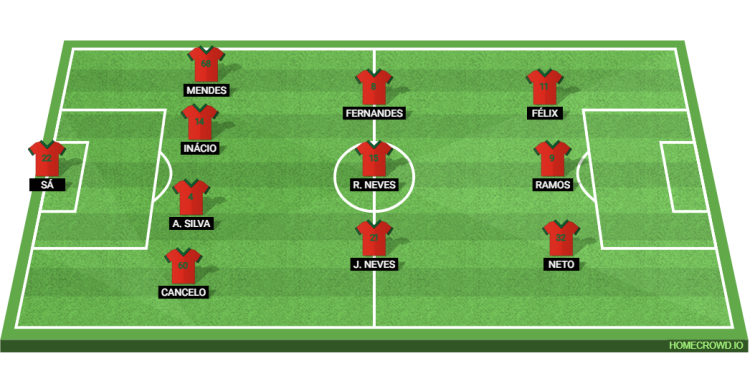
Tactically, Portugal are expected to line up in a 4-3-3 formation, a shape that should still allow them to dominate possession and control the rhythm of the game despite the number of absentees. In goal, Jose Sa is likely to start and will be tasked with bringing calmness and reliability at the back in the absence of Diogo Costa.
At right-back, Joao Cancelo is expected to feature and should once again be one of Portugal’s key creative outlets from deeper positions, while Antonio Silva and Goncalo Inacio are likely to form the central defensive partnership. Both centre-backs are comfortable in possession and should help Portugal build attacks from the back with composure. On the left side, Nuno Mendes is expected to start and will provide pace, athleticism and attacking support down the flank.
In midfield, Portugal are likely to field a technically excellent trio consisting of Joao Neves, Ruben Neves, and Bruno Fernandes. Joao Neves should bring energy, mobility and pressing intensity in central areas, while Ruben Neves is likely to operate from a deeper role where he can dictate play with his passing range and composure.
Bruno Fernandes, as expected, will probably be given greater attacking freedom and should be central to Portugal’s creativity, constantly looking to thread passes into dangerous spaces and connect midfield with the front line. Even without several regulars, this midfield remains one of Portugal’s biggest strengths and could prove decisive if they are allowed to settle into their passing rhythm.
Further forward, Portugal are expected to use Pedro Neto on the right wing, Goncalo Ramos through the middle, and Joao Felix from the left. Neto’s pace and direct running should make him a major threat in one-on-one situations, while Joao Felix is likely to drift into central spaces and operate with freedom between the lines. Through the middle, Ramos should lead the attack and provide movement, finishing ability and a strong presence inside the penalty area. Even with a weakened squad on paper, they still possess enough quality to make them a very dangerous opponent.
Probable Lineup (4-3-3): Sa; Cancelo, Antonio Silva, Inacio, Mendes; Joao Neves, Ruben Neves, Fernandes; Neto, Ramos, Felix
With Cristiano Ronaldo unavailable, this could be the kind of night that allows Joao Felix to take on a far more influential role for Portugal. There is no question that Ronaldo’s absence changes the structure and personality of the away side’s attack. When he plays, so much of the team’s final-third approach naturally revolves around him, whether through service into the box, occupying defenders, or simply the gravitational pull he creates around the goal.
Without him, Portugal are likely to become a more fluid and less predictable attacking side, and that could suit Felix perfectly. This is the type of match where he can truly thrive. Rather than being asked to play around a fixed central reference point, Felix may now have the freedom to drift into pockets of space, combine with midfielders, and influence the game in a more natural way.
He is at his best when he is allowed to roam, link play, and operate between the lines rather than simply hold width or stay locked into one channel. Against a Mexico side that may look to stay compact and energetic in midfield, that movement could be especially important.
Portugal are still likely to dominate long spells of possession, and that means Felix should see plenty of the ball in dangerous areas. If he starts from the left side of the front three, he will not necessarily stay there for long. Expect him to drift inside, look for combinations with Bruno Fernandes and Goncalo Ramos, and try to exploit the spaces that open up when Mexico are forced to shuffle across.
Perhaps most importantly, Ronaldo’s absence gives Felix a chance to become one of Portugal’s main attacking reference points rather than a supporting figure. That shift in responsibility could bring the best out of him. He has always had the technical quality and imagination to unlock games like this, what he sometimes needs is the tactical freedom and trust to take ownership of attacking phases.
This has the feel of a tightly contested friendly, with both sides bringing different strengths into what should be a lively occasion in Mexico City. Mexico will be fuelled by home support and the emotional significance of the stadium reopening, and they are likely to start with intensity. Their recent uptick in form suggests they can stay competitive, press with purpose and create moments, especially if Raul Jimenez and Alexis Vega are able to link effectively in attack.
However, Portugal still appear to have the stronger overall structure, particularly in midfield. Even without several key players, their technical quality and control in possession should allow them to dictate key phases of the game. Players like Bruno Fernandes and Joao Felix could prove decisive in unlocking Mexico’s defensive shape. Mexico should make this competitive, especially in front of their home crowd, but Portugal’s composure and attacking fluidity may ultimately give them the edge.
