
A familiar rivalry is rekindled this weekend as the USA host the Belgium at the Mercedes-Benz Stadium in Atlanta on Saturday.
More than a nostalgic nod to their unforgettable 2014 World Cup meeting, this friendly carries real weight. With the 2026 tournament fast approaching, both nations are using fixtures like this to sharpen identity, settle selection dilemmas and test themselves against elite opposition.
The USMNT arrive in strong form and with growing belief under Mauricio Pochettino. A dominant 5-1 win over Uruguay closed out their 2025 campaign and extended a positive run that has seen them win three straight matches and remain unbeaten in five. More importantly, there has been visible tactical progression, greater structure without the ball, improved control in midfield and a more cohesive attacking press.
Defensively, they have been particularly disciplined. The Americans have conceded one goal or fewer in each of their last five matches and have not allowed a second-half goal in their last six internationals. That speaks to a team that is learning to manage games better, something that will be crucial at the World Cup.
However, there remains one glaring issue: results against European opposition. The USMNT are currently on a losing streak against UEFA sides and have historically struggled in such match-ups, something even players within the squad have acknowledged.
Belgium, meanwhile, arrive with less noise but no less confidence. Under Rudi Garcia, the Red Devils have begun to shed the inconsistency that defined the latter years of their so-called golden generation. Since his appointment, Belgium have lost just once and are building a reputation for controlled, efficient performances.
Their recent numbers suggest just that stability, as Belgium are unbeaten in their last nine matches and have avoided defeat in multiple away fixtures, showing a level of resilience that had sometimes eluded them in the past.
Even more encouraging is their ability to respond under pressure. They have shown composure when conceding first, refusing to panic and often finding a way back into games, a trait that could prove crucial in a high-tempo away environment like Atlanta.
There are, however, notable absences. Star striker Romelu Lukaku has withdrawn from these friendlies to focus on fitness, removing a key focal point in attack. Yet Belgium’s depth means they still carry a significant attacking threat across the pitch.
The United States are likely to play with intensity, especially at home. Pochettino’s system relies on aggressive pressing, vertical transitions and full-backs pushing high to stretch the game. Expect the Americans to look to disrupt Belgium early, forcing turnovers and attacking quickly before the visitors can settle.
Belgium, by contrast, are more measured. They prefer structured build-up play, controlled possession and intelligent movement between the lines. With players comfortable operating in tight spaces, they are well-equipped to bypass pressure and exploit gaps if the US commit too many bodies forward.
This creates a fascinating dynamic. If the US press works, they can unsettle Belgium and create chances. If it fails, Belgium’s technical quality could allow them to dominate phases of the game and punish defensive gaps.
Perhaps the most compelling storyline is whether the United States can finally overcome their struggles against European teams. Despite recent progress, results against top UEFA opposition remain a concern. The talent gap has narrowed, but translating that into victories has been another matter entirely.
Belgium represent the perfect test as a side with pedigree, structure and experience, but also one still evolving. For the US, this is an opportunity to send a statement ahead of the World Cup on home soil. The Hard Tackle takes a look at how the teams could line up on the night and what tactics they might employ.
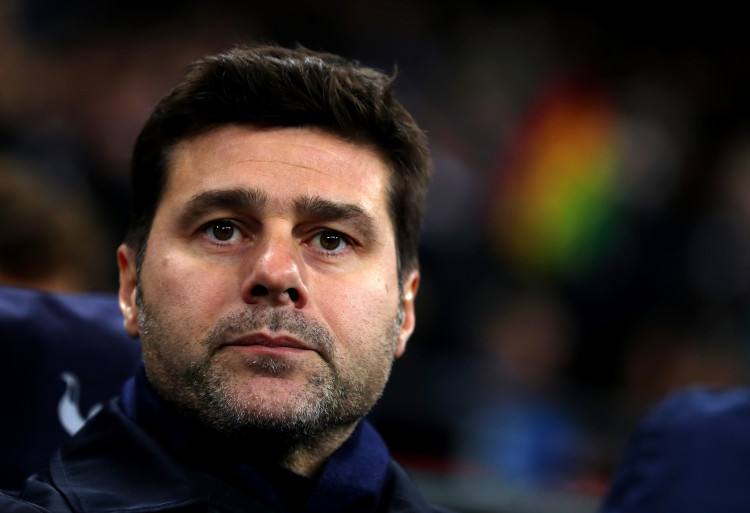
For the United States, Mauricio Pochettino heads into this friendly with a few notable absences, particularly in key areas of the pitch. The most significant setback is the absence of Tyler Adams, who remains unavailable due to an MCL issue. His absence is an important one, as Adams brings leadership, defensive intelligence and balance in midfield, particularly in matches where the United States need control against technically strong opponents.
Elsewhere, Haji Wright is also unavailable due to a groin problem, while Sergino Dest misses out with a hamstring strain, reducing the home side’s options in wide and attacking areas. Goalkeeping depth has also taken a slight hit, with Roman Celentano ruled out after picking up a knock. There are no major suspension concerns for the United States heading into this contest, which means Pochettino should still be able to field a strong and competitive starting XI.
On the positive side, star winger Christian Pulisic enters the game on the verge of a personal milestone, sitting just two goals away from matching Eric Wynalda on the all-time US scoring charts, while Folarin Balogun arrives in excellent form after a productive spell at club level with AS Monaco.
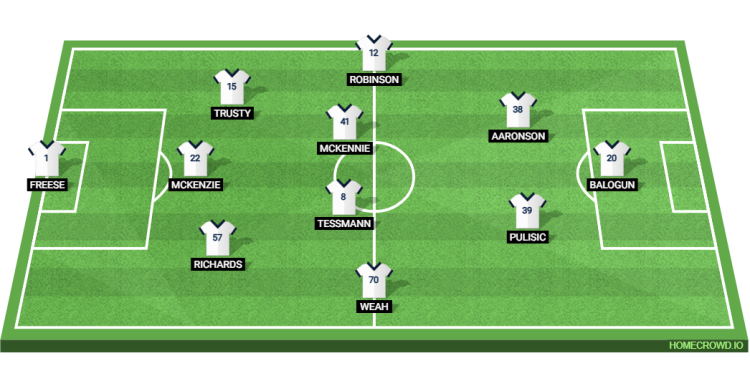
Tactically, the United States are expected to line up in a 3-4-2-1 formation, a system that should allow them to combine defensive stability with flexibility in wide and attacking positions. In goal, Matt Freese is likely to start and will be expected to play a composed role both as a shot-stopper and as the first point of distribution from the back.
The back three should consist of Chris Richards, Mark McKenzie, and Auston Trusty, giving the US a blend of athleticism, physicality and ball-playing ability in central defence. Richards is likely to offer composure and recovery pace, McKenzie should bring aggression and defensive leadership, while Trusty provides a natural left-footed option to help build play down that side.
Across midfield, Timothy Weah is expected to operate as the right wing-back, where his pace and direct running could make him a major outlet in transition. On the opposite flank, Antonee Robinson should start as the left wing-back, bringing his usual energy, forward thrust and crossing ability.
In central midfield, Tanner Tessmann and Weston McKennie are likely to form the engine room. Tessmann may be asked to provide a calmer presence in possession and help dictate the rhythm, while McKennie should bring his trademark dynamism, physicality and ability to break forward into advanced positions.
Further up the pitch, the United States are expected to use Christian Pulisic and Brenden Aaronson in the two advanced attacking midfield roles behind the striker. Pulisic should once again be the side’s main creative and attacking spark, with the freedom to drift into dangerous pockets of space, drive at defenders and link play in the final third. Aaronson, meanwhile, is likely to provide pressing intensity, intelligent movement and support between the lines.
Leading the attack, Folarin Balogun is expected to start as the lone centre-forward. Given his current form, he will be one of the USA’s biggest threats and should be relied upon to stretch Belgium’s backline, attack space behind the defence and convert the chances that come his way. Overall, the United States are likely to set up with an energetic, modern shape that allows them to press aggressively, attack with width and pace, and remain competitive against a technically superior Belgian side.
Probable Lineup (3-4-2-1): Freese; Richards, McKenzie, Trusty; Weah, Tessmann, McKennie, A. Robinson; Pulisic, Aaronson; Balogun
For Belgium, the biggest talking point ahead of this friendly is the number of notable absentees, particularly among the side’s more experienced attacking players. Record goalscorer Romelu Lukaku has withdrawn from the squad due to a hamstring issue, depriving Belgium of their most established centre-forward and proven focal point in attack. In addition, Hans Vanaken and Leandro Trossard have both been left out because of injuries, reducing the options available to Rudi Garcia in advanced midfield and wide areas.
There is also a concern surrounding first-choice goalkeeper Thibaut Courtois, who is unavailable after suffering a thigh injury in Real Madrid’s recent UEFA Champions League victory over Manchester City. There are no major suspension concerns for Belgium heading into this encounter, so while the visitors are missing some star names, Garcia still has enough quality and depth to field a very strong side.
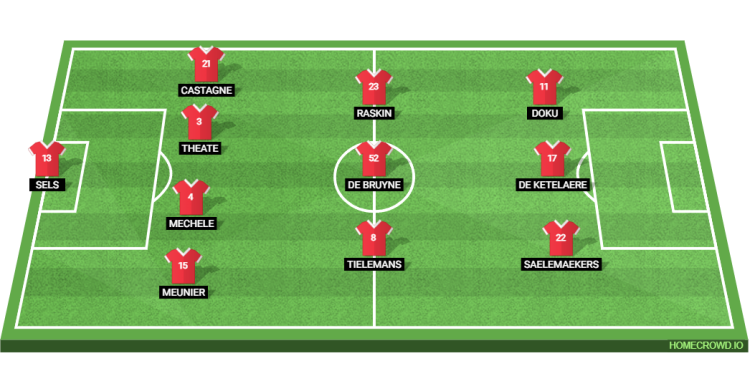
One player who will once again carry huge importance is Kevin De Bruyne, who enjoyed a prolific 2025 for the national team and moved ahead of Eden Hazard into second place on Belgium’s all-time scoring list. Tactically, Belgium are expected to line up in a 4-3-3 formation, a shape that should allow them to maintain balance between technical control in midfield and pace in the attacking third.
In goal, Matz Sels is likely to start in the absence of Courtois and will be tasked with bringing calmness and reliability at the back. At right-back, Thomas Meunier is expected to feature and should provide width and forward support, while Brandon Mechele and Arthur Theate are likely to form the central defensive partnership. Theate, in particular, offers a left-footed option and composure in build-up, while Mechele should bring physical presence and defensive solidity. On the left side of defence, Timothy Castagne is expected to start and will be relied upon to balance his defensive duties with overlapping support down the flank.
In midfield, Belgium should once again be built around the quality and intelligence of Youri Tielemans, Kevin De Bruyne, and Nicolas Raskin. Tielemans is likely to provide control and progression from deeper areas, while Raskin may be asked to do much of the pressing and defensive work in midfield. De Bruyne, as expected, will be the central creative force, operating with the freedom to dictate attacks, thread passes into dangerous areas and arrive late around the edge of the box. If Belgium are to control the rhythm of the game and create openings against the United States, De Bruyne will almost certainly be at the heart of it.
Further forward, Belgium are expected to field Alexis Saelemaekers on the right wing, Charles De Ketelaere through the middle, and Jeremy Doku from the left. Saelemaekers should offer energy, work rate and width, while Doku will likely be Belgium’s most explosive 1v1 threat with his dribbling and acceleration. De Ketelaere is expected to operate as the central attacking figure and may be used in a more fluid false-nine or roaming forward role rather than as a traditional target man, especially in the absence of Lukaku.
Overall, Belgium’s likely setup suggests a side that will look to dominate the ball in phases, use their technical superiority in midfield, and rely on movement and creativity rather than physical directness in the final third. Even with several key absentees, they still possess enough quality to make life very difficult for the United States.
Probable Lineup (4-3-3): Sels; Meunier, Mechele, Theate, Castagne; Tielemans, De Bruyne, Raskin; Saelemaekers, De Ketelaere, Doku
If the United States are to trouble Belgium in Atlanta, Christian Pulisic is the player most likely to make it happen. Against a technically polished Belgian side that will likely enjoy spells of possession and try to control the rhythm of the match, the USA will need someone capable of turning moments into momentum. Pulisic is exactly that type of player.
Whether he is carrying the ball through midfield, drifting into dangerous spaces between the lines, or driving directly at defenders in transition, he remains the home side’s most dangerous and unpredictable attacking weapon. From a tactical perspective, he should be central to how Mauricio Pochettino wants the game to unfold.
The USA are likely to play with energy, press aggressively and look to attack quickly when opportunities arise. That approach suits Pulisic perfectly. If Belgium commit bodies forward or lose shape during attacking phases, he is the player most capable of exploiting the space left behind. His acceleration, close control and ability to draw fouls in dangerous areas could be hugely important in a match that may hinge on a few decisive attacking moments.
The USA may not dominate the ball against Belgium, but they do not necessarily need to if Pulisic is at his best. If he can find pockets of space, combine effectively with Folarin Balogun and Brenden Aaronson, and make Belgium’s backline uncomfortable in transition, he could be the player who gives the hosts belief. In a fixture that should offer a strong test of the USA’s readiness for the World Cup, Pulisic feels like the man most likely to rise to the occasion.
This should be a highly competitive friendly between two teams who are using the occasion for more than just match fitness. Both the USA and Belgium have quality, momentum and enough attacking talent to make this an entertaining contest, but the visitors may just hold a slight edge.
The hosts should make this difficult, especially with the energy they are likely to bring in front of a home crowd in Atlanta. Mauricio Pochettino’s side have shown encouraging defensive structure in recent matches and will back themselves to stay organised, press aggressively and create moments in transition.
If Christian Pulisic and Folarin Balogun click in the final third, the Americans are capable of causing problems. However, Belgium still look like the more complete side on paper. Even with several notable absences, they retain a high level of technical quality, and players such as Kevin De Bruyne, Jeremy Doku, and Youri Tielemans give them enough control and attacking threat to dictate key phases of the game.
Their experience in managing high-level internationals may also prove important if the match becomes stretched or tactically tense. Th’e USA should be competitive and could certainly get on the scoresheet, but Belgiums composure and quality in possession may ultimately make the difference.
