
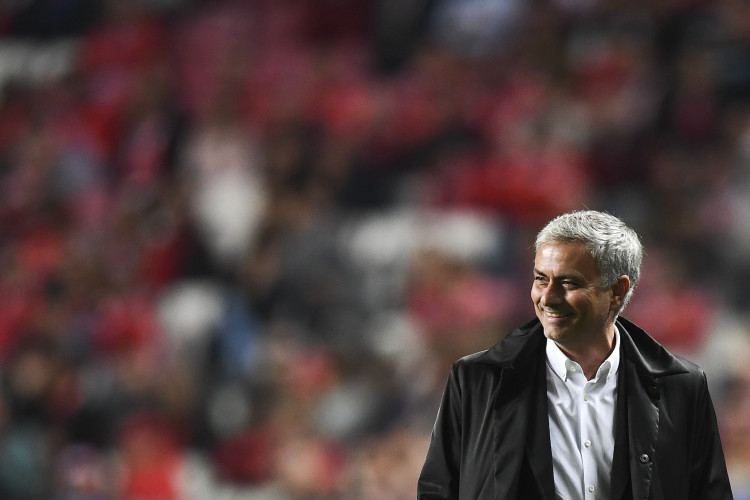
Real Madrid are on the verge of going back to one of the most polarising yet successful figures of the modern era: Jose Mourinho.
Jose Mourinho is set to replace interim boss Alvaro Arbeloa ahead of next season on a two-year deal. This is not a romantic nostalgia hire; it is a calculated choice. Real Madrid see a squad packed with physical power, tactical intelligence, and transition monsters, and they are about to hand it to a coach whose entire career has been built on controlling space, managing moments, and punishing opponents when they lose structure.
Mourinho is not returning as the hungry FC Porto upstart or the “Special One” of Chelsea’s first spell. He comes back as a manager whose methods have been questioned in recent years, whose stints at Manchester United, Tottenham, and even AS Roma have been described as uneven, effective in phases but no longer at the cutting edge every week.
Yet at clubs where he had the right tools – Porto, Chelsea, Inter Milan, and that first Real Madrid spell – his approach produced trophies and some of the most ruthless teams of their eras.
For Real Madrid fans, this reunion is about one thing: whether Mourinho’s tactical model, sharpened and slightly modernised, can mesh with a squad built for high-energy transitions and technical dominance. The short answer is yes, but the football will look very different from the Xabi Alonso possession-control phase.
Across FC Porto, Chelsea, Inter Milan, Real Madrid, Manchester United and Roma, Mourinho has worked from the same basic game model built around four key moments of the game: offensive organisation, defensive organisation, attacking transition (counter-attacks), and defensive transition. His teams aim to be strong in all four, but his signature has always been:
Deep, compact defending in a 4-2-3-1
Aggressive, vertical counter-attacks when the ball is won
Tactical discipline over constant pressing or high-risk possession
In defence, he prefers a zonal structure with man-oriented references: players defend spaces but stay close enough to their direct opponents to prevent easy progression. That is where the famous “park the bus” comes from, with lines of four and sometimes six, leaving almost no gaps between midfield and defence. It looks negative, but it is designed to force opponents into wide areas and low-percentage shots.
In attack, however, his best teams are anything but passive. Once the ball is recovered, the first thought is to move it quickly out of pressure and then forward, often through a powerful ball-carrier or a direct pass into an advanced forward or winger. From there, support runs explode around the ball, horizontally to stretch the defence, then vertically to attack space.
Think of the classic Real Madrid counters under his first spell: three or four players sprinting forward at full speed, with the ball arriving in the box in two or three passes. That structure, with compact, aggressive, transition-based, fits this Madrid squad better than it might seem at first glance.
Expect Mourinho to make 4-2-3-1 his default shape at Real Madrid. It is the system he trusts most because it naturally creates the double pivot that protects the backline and forms the launchpad for counters. For Madrid, it also offers a clear way to use Jude Bellingham, the club’s elite midfielders, and their pace in wide and central areas.
The identity of the double pivot will define the tone of this Real Madrid side under the new manager. Jose Mourinho likes this pair to do three things above all:
Screen central zones and deny passes between the lines
Win duels and second balls
Play the first simple, vertical pass to start transitions
Aurelien Tchouameni looks tailor-made for the holding role. He has the physical presence to protect the centre, the reading of the game to cut passing lanes, and enough passing range to switch play when Madrid win the ball in deep areas. Next to him, there are two different interpretations possible.
With Federico Valverde, Mourinho gets a box-to-box runner who can shuttle wide to help full-backs, press in midfield, and carry the ball aggressively when space opens up. This would resemble the old Sami Khedira role in Mourinho’s first Madrid team, a player who links defence and attack with lung-busting runs rather than constant elaborate passing.
With Eduardo Camavinga, the pivot becomes more all-round and slightly more possession-friendly. Camavinga can dribble out of pressure, cover wide spaces, and step into higher zones when Madrid have long spells without the ball, giving the team a way to escape pure “soak and counter” patterns.
Given Mourinho’s history, rotation between all three is likely, with at least one natural destroyer (Tchouameni or Camavinga at the base) and one high-intensity runner (very often Valverde) in most big games.
At the same time, Real Madrid could look to the market for a new “Luka Modric type” midfielder, someone who can operate in tight spaces, link defence to attack with short, sharp passes, and still participate in transitions.
Mourinho’s best teams always had that kind of player: Deco at FC Porto, Frank Lampard at Chelsea, Wesley Sneijder at Inter Milan, Luka Modric and later Angel Di Maria drifting inside at Madrid. This profile would allow him to vary between a more control-based 4-2-3-1 and a pure transition model depending on the opponent.
On paper, Jude Bellingham will be the “10” in Mourinho’s shape. In reality, he will function more as a box-to-box midfielder, constantly connecting with the double pivot behind him.
Mourinho likes his central attacking midfielder to:
Drop close to the pivots when defending, closing central lanes
Arrive late into the box rather than stay between the lines permanently
Lead counters with powerful ball-carrying when space opens up
Bellingham fits all three points. His work off the ball is strong enough to form a narrow midfield three out of possession, which helps Mourinho keep the block compact. In possession, he can time his runs into the box to attack cut-backs and second balls, a pattern Mourinho has used repeatedly at past clubs.
This role would also protect Bellingham somewhat from constant man-marking between the lines. When he starts deeper and runs past the opposition midfield, he becomes harder to track than a traditional static playmaker.
Mourinho’s use of wingers has evolved, but one theme repeats: he likes asymmetry. Often, one winger is there to stretch the game and threaten depth; the other drifts inside, operates in pockets, and helps create overloads in central zones.
Expect him to use:
One winger and the central forward as the pure speed outlets. Their job is to run into space as soon as the ball is won, forcing defences to drop and opening lanes for midfield runners.
The opposite winger as a chief creator, someone who can receive between the lines, link with Bellingham, and even drop into midfield to help defend or circulate possession when Real Madrid need to breathe.
Mourinho has a long track record of using wide players to create overloads on one side and then switch quickly to the “weak side” where the defence is thinner. That could translate at Real Madrid into patterns where the creator winger tucks inside, the full-back overlaps, and Bellingham shifts across to combine, before a fast diagonal ball is played towards the far-side winger or striker making a run.
Crucially, his wingers will not be protected from defensive work. Under Mourinho, wide players are expected to sprint back to form either a midfield four or, in big games, a temporary back six. He has used wingers as auxiliary full-backs before when defending a lead, and that mentality will surface again, especially in Champions League knockout ties.
Mourinho’s attacking model likes a reference point up front, but that does not always mean an old-school target man. What he wants is:
A striker who can occupy centre-backs physically
Someone who can either hold up long passes or run into space behind
A finisher who is ruthless when counters are executed well
At previous clubs, he has gone long into a strong forward to bypass pressure and then allowed technical players to swarm around the second ball. At Real Madrid, with their quality between the lines and on the wings, the striker will often be the first receiver of direct balls when Madrid are under pressure.
The difference now is that this squad is built around speed and fluidity rather than a single dominant target man. So Mourinho may encourage more diagonal balls into channels rather than constant high balls to a central reference. But the principle remains: the striker must be the point that connects transition passes with runners from deep.
While 4-2-3-1 will likely be the base, Mourinho has always adjusted his structure to opponents and competitions. Two alternative looks stand out as realistic options at Real Madrid.
Against weaker opponents in La Liga, Mourinho could shift to a 4-3-3 variant where one of the double pivot steps higher to form a more classic midfield three with Bellingham. This would:
Give Real Madrid more security in possession
Allow an extra midfielder to help circulate the ball and recycle attacks
Free one full-back to push higher, with the opposite full-back staying conservative
In this version, Tchouameni would likely remain the single pivot, with Valverde and Bellingham as the advanced eights. Camavinga could rotate either as the 6 or as the more dynamic 8. This structure would look closer to what Madrid fans have seen in recent seasons, but with more emphasis on quick vertical passes once space appears rather than long patient spells of recycling the ball.
In UEFA Champions League knockouts or away games against elite opposition, do not be surprised if the team slides into a flatter 4-4-1-1 out of possession. The “10” (Bellingham) drops closer to the midfield line, wingers drop deep, and the striker is left high as the main outlet.
This is where the infamous “bus” narrative could return. Lines will be tight, distances small, and pressing will be limited mostly to wide areas or specific triggers rather than a full-pitch press. But whenever Real Madrid win the ball, the reaction will be ruthless:
First pass out of pressure, usually to a full-back or dropping midfielder
Immediate runs forward from the striker, Bellingham, and the sprint winger
A direct vertical or diagonal pass to exploit disorganisation in the opponent’s rest defence
These situations are where Mourinho historically wins big ties. And with the physicality and speed Madrid have stockpiled, his transition game could once again become one of the deadliest in Europe.
It is fair to say Mourinho has been on a tactical and reputational decline since his peak years. His Manchester United and Tottenham sides mixed strong spells with periods of flat, predictable football, and at times, he seemed slow to adapt to pressing-heavy, possession-dominant opponents.
However, two points make this Real Madrid job fundamentally different from those situations:
Squad profile: Madrid already have players built for transitions – powerful runners in midfield, aggressive ball-winners, and attackers who thrive in space. Mourinho does not need to bend the squad to his ideas as much as he did elsewhere.
Context of expectations: Carlo Ancelotti and Xabi Alonso have given Madrid a structure and habit of winning without needing 70% possession every week. Fans are used to a more balanced, pragmatic kind of dominance, not tiki-taka for its own sake.
If Mourinho adds modern tweaks, with slightly higher pressing lines in certain games, more structured build-up patterns when teams sit deep, his core principles of deep defensive solidity, tactical flexibility, and lethal counter-attacking are still highly relevant. The Champions League, especially, is often decided by teams that defend space well and punish mistakes instantly.
