
Italy will hope to kick-start yet another rebuild when they travel to Luxembourg as the shadow of the 2026 FIFA World Cup looms large.
Italy arrive at this friendly still carrying the weight of another World Cup disappointment. For a country with four world titles and one of the richest football traditions in the game, missing out on the global stage again has only deepened the sense of frustration around the national team.
The pressure to qualify for the 2026 World Cup had already been enormous before Italy entered the playoff route. Their campaign had been unsettled from the start, with Luciano Spalletti dismissed after a heavy 3-0 defeat to Norway in their opening qualifier. Gennaro Gattuso was then brought in, but his spell in charge proved brief and ultimately unsuccessful.
Italy managed to beat Northern Ireland in the play-off semi-finals, but their hopes were crushed in dramatic fashion in the final against Bosnia and Herzegovina. After being held to a 1-1 draw in Zenica, the Azzurri lost on penalties to a side ranked far below them in the FIFA standings. It was another devastating blow for a nation still haunted by recent qualifying failures.
The contrast between Italy’s history and their current reality is stark. They remain four-time world champions and were crowned European champions in 2021, yet they have not appeared at a World Cup since 2014. That long absence from the tournament’s biggest stage now continues, forcing the national team into another period of reflection.
Gattuso departed quickly after the playoff failure, leaving Silvio Baldini to step in as interim head coach. Baldini, who has been working with Italy’s Under-21 side, will take charge of the senior team for the upcoming friendlies against Luxembourg and Greece while the Italian Football Federation waits to make a permanent appointment after the presidential elections later this month.
Given the circumstances, this international window is less about immediate results and more about assessment. Several established stars have been given time off after a demanding season, allowing Baldini to name a squad built largely around players from Italy’s youth ranks. That makes the Luxembourg friendly a chance for emerging talents to show they can be part of the next phase.
Luxembourg, on the other hand, will enter the fixture with far less pressure. Their recent competitive record has been difficult, but they can take encouragement from the fact that they held Italy to a 1-1 draw in the last meeting between the nations 12 years ago. That result in Perugia was a major shock at the time and remains one of Luxembourg’s most memorable friendly results.
Historically, however, Italy have dominated this match-up. Before that draw, Luxembourg had lost their previous five meetings with the Azzurri, conceding an average of three goals per game. That record underlines the size of the task facing the hosts, even against an Italian squad that is expected to be far from full strength.
Luxembourg’s recent World Cup qualifying campaign offered little encouragement. They failed to collect a single point against Germany, Slovakia and Northern Ireland, leaving them well short of contention in their group. That followed a poor UEFA Nations League campaign in which they finished bottom of League C Group 3 with just three points from six matches.
Still, there has been a small positive shift under new coach Jeff Strasser. In March, he claimed his first wins as Luxembourg manager as his side beat Malta home and away in the Nations League promotion/relegation playoff. Those results ensured that Luxembourg avoided dropping into Europe’s bottom tier, giving them some stability before the next Nations League cycle begins. The Hard Tackle takes a look at how both sides could line up and what tactics they might employ on the day.
Luxembourg are expected to rely on a more settled and familiar group for the friendly against Italy. Unlike the Azzurri, who are likely to field several inexperienced players, Jeff Strasser has named a squad with a strong core of regular internationals. Captain Laurent Jans remains one of the most important figures in the team, with the 122-cap veteran set to provide leadership and defensive experience from the backline.
Luxembourg have no major suspension concerns heading into this friendly. Their most notable absentee is Benfica midfielder Leandro Barreiro, who has been struggling with injury problems in recent weeks and is not expected to feature.
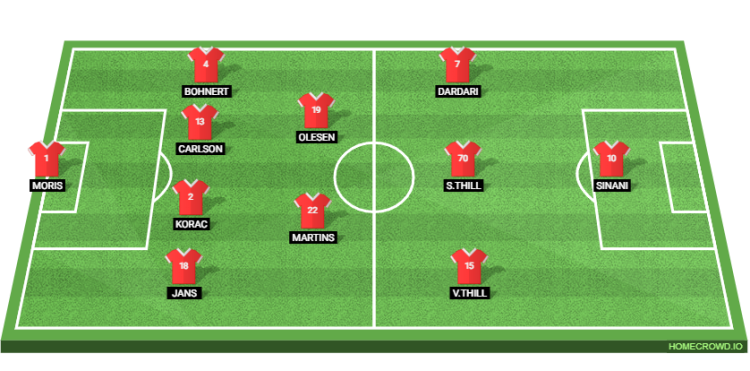
Luxembourg are expected to line up in a 4-2-3-1 formation, with Anthony Moris starting in goal. Laurent Jans should captain the side from right-back, where his experience and defensive awareness will be important against Italy’s wide attackers. Seid Korac is likely to start as one of the centre-backs, with Dirk Carlson expected to partner him in central defence. Florian Bohnert should operate at left-back, where he will need to stay disciplined while also supporting Luxembourg’s attacks when possible.
In midfield, Christopher Martins is expected to start in the double pivot and will partner Mathias Olesen. Upfield, Vincent Thill is likely to begin on the right wing, where his recent scoring form can give Luxembourg a useful attacking outlet. Sebastien Thill is expected to play as the central attacking midfielder, linking midfield with attack and looking to supply the forward line. Aiman Dardari should start on the left wing, while Danel Sinani is expected to lead the attack as the central striker.
Probable Lineup (4-2-3-1): Moris; Jans, Korac, Carlson, Bohnert; Martins, Olesen; V. Thill, S. Thill, Dardari; Sinani
Italy are expected to field a heavily youthful and experimental side as they begin their post-World Cup qualifying reset under interim head coach Silvio Baldini. The squad that recently gathered at Coverciano contains very little senior international experience, with only Marco Palestra, Niccolo Pisilli, Francesco Pio Esposito and captain Gianluigi Donnarumma having previously been capped at senior level.
Given the experimental nature of the squad, Baldini is likely to use the match to assess how these players respond to senior international football. Italy do not have any suspension concerns heading into the friendly against Luxembourg. The only confirmed injury-related absence is Lorenzo Venturino, with the AS Roma youngster forced to withdraw from the squad.
Cesena midfielder Tommaso Berti has been called up as his replacement and will hope to be involved at some stage. With several senior players rested for this international window, the focus will be on giving minutes to emerging talents rather than relying on established names.
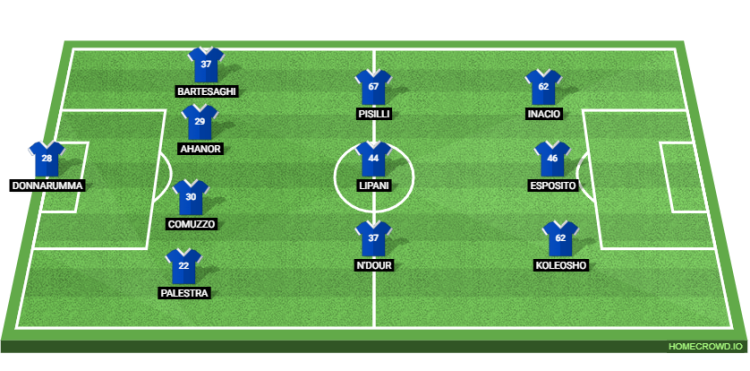
Italy are expected to line up in a 4-3-3 formation, with Gianluigi Donnarumma starting in goal and captaining the side. In defence, Marco Palestra is likely to start at right-back while Pietro Comuzzo and Honest Ahanor in central defence, whereas Davide Bartesaghi is expected to operate at left-back.
In midfield, Cher Ndour could start on the right side of the central three, giving Italy physicality, ball-carrying ability and energy between the lines. Luca Lipani is likely to operate as the deepest midfielder, helping to screen the defence and distribute possession from central areas. Niccolo Pisilli should complete the midfield unit.
Upfield, Luca Koleosho is expected to start on the right wing while Francesco Pio Esposito should lead the line as the central striker, providing a strong penalty-box presence and a focal point for Italy’s attacks. Samuele Inacio is likely to start from the left wing, where he can cut inside and combine with the midfielders.
Probable Lineup (4-3-3): Donnarumma; Palestra, Comuzzo, Ahanor, Bartesaghi; Ndour, Lipani, Pisilli; Koleosho, Esposito, Inacio
With Italy naming a youthful and experimental squad, the centre-forward position will be one of the most interesting areas to follow. Esposito is expected to lead the line, and his performance could matter beyond this single fixture. Italy are beginning another rebuild after a painful World Cup qualifying failure, and young forwards who can offer presence, composure and goal threat will be watched closely.
Esposito’s physical strength and penalty-box instincts should make him a useful focal point in Italy’s 4-3-3 system. Against a Luxembourg side likely to defend in a compact shape, he will need to hold the ball up, occupy the centre-backs and attack crosses from wide areas.
This match is also a test of temperament. Italy’s younger players will be under pressure to show they can belong at senior international level, and Esposito has the chance to take an important step forward. If he can combine well with Luca Koleosho and Samuele Inacio, Italy should have enough movement and energy to trouble Luxembourg’s defence.
Italy will be missing several senior players and are expected to field a young, experimental side, which could make the contest less straightforward than usual. Luxembourg should be organised and motivated, particularly after their recent playoff wins over Malta.
However, even a rotated Italy squad should have enough technical quality and depth to control the game. The Azzurri may not produce a dominant performance, but they should find a way to start this new phase with a win.
