
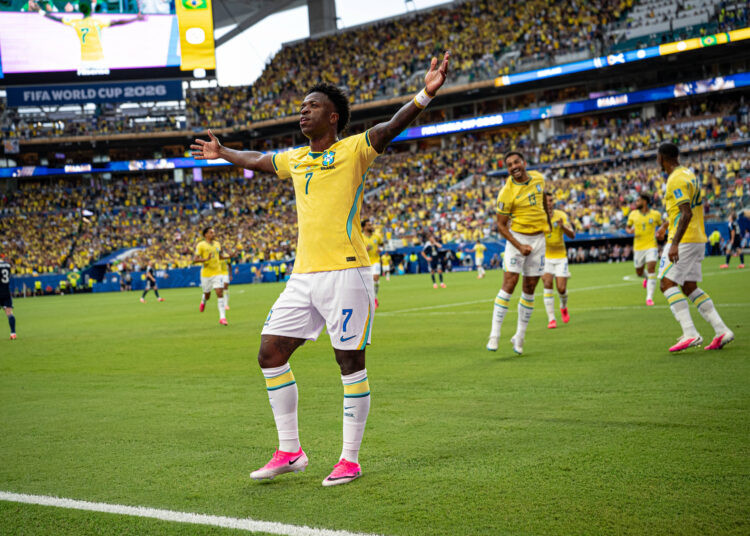
The Hard Tackle discusses the three major talking points from Day 14 of the 2026 FIFA World Cup, which produced some eye-catching action.
Day 14 of the 2026 FIFA World Cup delivered everything a tournament hungry for drama could want: goals in every fixture, statement wins from traditional powers, nervy comebacks and a genuine underdog story.
The action started with the Group B games, with the game between Switzerland and Canada stealing the show. In front of a passionate Canadian crowd at BC Place, Nati produced a composed performance to win 2-1 and take first place in Group B. The hosts pulled one back late and pressed hard for an equaliser, but Switzerland’s experience and game management saw them through.
Meanwhile, Bosnia and Herzegovina put on a statement display, dispatching Qatar to move themselves firmly into contention for one of the best third-place spots. Their win was a mixture of attacking invention and defensive solidity. Qatar, who had shown flashes in the tournament, were unable to cope with Bosnia’s tempo and incisiveness on the day, leaving the European side with four points and bright prospects of advancing.
The action then continued with Group C games, with Brazil continuing from where they left off against Haiti. The Selecao made it another comfortable night, with Vinicius Junior the fulcrum of their attacking threat as Carlo Ancelotti’s side ran out comfortable winners. The result cemented Brazil’s status as one of the tournament favourites and kept their momentum rolling into the knockout phase.
In the other Group C clash, Morocco survived a scare but showed character in abundance, twice coming from a goal down to win 4-2. Haiti’s spirited first-half display threatened to derail the favourites, but the substitutes changed the game for the Atlas Lions. Ultimately, Morocco’s quality and depth told, and they secured progression.
South Africa produced the evening’s most unexpected result, overturning expectations to beat South Korea 1-0 and book their place in the round of 32. After two sluggish group games, few anticipated that they would find the cohesion and verve necessary to overcome a South Korea side fancied to win. However, a disciplined showing has now carried them to the next phase of the 2026 FIFA World Cup.
Finally, Mexico delivered a convincing performance to join South Africa in the knockout places and winners of Group A of the 2026 FIFA World Cup. El Tri dominated Czechia across several phases of play. Their attacking thrusts and midfield control gave them the platform to convert chances and close out the game. The visitors, despite pockets of possession and effort, could not match Mexico’s clinical edge and will head home disappointed by a campaign that fell short of expectations.
Vinicius Junior is charging this World Cup with the sort of form that silences critics and makes opponents alter their entire game plan. Of Brazil’s seven goals so far, he has been involved in five (G4 A1), and his brace against Scotland was another reminder that he is now not just an outlet but the primary engine of their attack.
His combination of direct pace, inventive dribbling and a newfound composure in front of goal makes him a constant threat: defenders must commit extra attention to him, which in turn creates space for Brazil’s supporting cast. Statistically and practically, Vinicius is a leading contender for the Golden Boot and, more importantly for Brazil, a player around whom Carlo Ancelotti can construct the decisive phases of his team’s offensive strategy.
While Brazil rode the Vinicius wave, Morocco provided a contrasting piece of tournament theatre. They proved that they are a team with the temperament to survive a scare and the depth to turn a game on its head. Down against Haiti, the Atlas Lions twice showed the kind of bench strength and tactical flexibility that differentiate good teams from great ones.
Soufiane Rahimi and Gessime Yassine, brought on as second-half substitutes, produced the impact coaches long for, changing the rhythm, stretching the defence and supplying the cutting edge in the final third. Morocco’s ability to remain calm after conceding and to marshal their resources effectively speaks to a squad mentality that is comfortable under pressure. That resilience, combined with attacking potency, makes them a dark horse capable of advancing deeper into the tournament than many predicted.
The Group B landscape shifted dramatically as Switzerland edged Canada 2-1 in Vancouver. Switzerland’s narrow win at BC Place was accomplished in an atmosphere heavily in Canada’s favour, but it showed the Swiss capacity to perform under hostile conditions. The victory gave them top spot in the group and, just as importantly, forced Canada to relinquish the advantage of hosting a round-of-32 tie on home soil.
For the World Cup’s co-hosts, the consequence is immediate and meaningful. Playing knockout football in the USA removes some of the logistical comfort and fan-driven advantage they might otherwise have enjoyed. Meanwhile, Bosnia and Herzegovina’s emphatic victory over Qatar complicates Group B’s permutations further.
With four points in the bank, the Dragons now sit in an attractive position to qualify as one of the eight best third-placed teams. Their performance combined clinical finishing with measured defending, the kind of balance required to grind out results against varied opposition.
For tournament watchers, Bosnia’s form is a reminder that the expanded World Cup format rewards consistency and opportunism. A well-timed win can vault a team back into contention even if they began the group stage cautiously.
Few predicted South Africa would flip the script against South Korea, but that is precisely what they did. Thapelo Maseko’s goal just after the hour mark was the defining moment in a match that South Africa controlled when it mattered: they nullified South Korea’s attacking rhythm, seized a chance, then defended with organisation and resolve. This win grants them a place in the round of 32 and vindicates a tactical reset that emphasised compactness and quick transitions. It also demonstrates that a team’s early tournament form is not always destiny; momentum can be manufactured with a single, decisive performance.
For South Korea, the defeat is worrisome. Pre-match expectations favoured them, and their inability to break down a side perceived as underperforming raises questions about tactical rigidity and finishing. The loss leaves the Taeguk Warriors staring at the prospect of an early exit or an awkward path to survival as one of the best third-placed teams, dependent on favourable results elsewhere. In short, Wednesday’s result underlines the fine margins in tournament football: one underwhelming performance can transform a team’s outlook from confident to precarious overnight.
Day 14 underlined three truths about major tournament football. First, momentum matters: players such as Vinícius can carry a side and influence outcomes beyond raw numbers. Second, margins decide fates — Switzerland’s narrow win and Canada’s late frustration reshaped group logistics and potential home advantage. Third, unpredictability remains baked into the event: Morocco’s come-from-behind win and South Africa’s timely resurgence remind us that attitude, substitutions and timing often outweigh reputations. As the tournament shifts into the knockout phase, those factors will only grow in significance; teams that combine star power with squad depth and tactical adaptability will hold the upper hand. Which ones have that blend is now the question everyone will be watching.
