
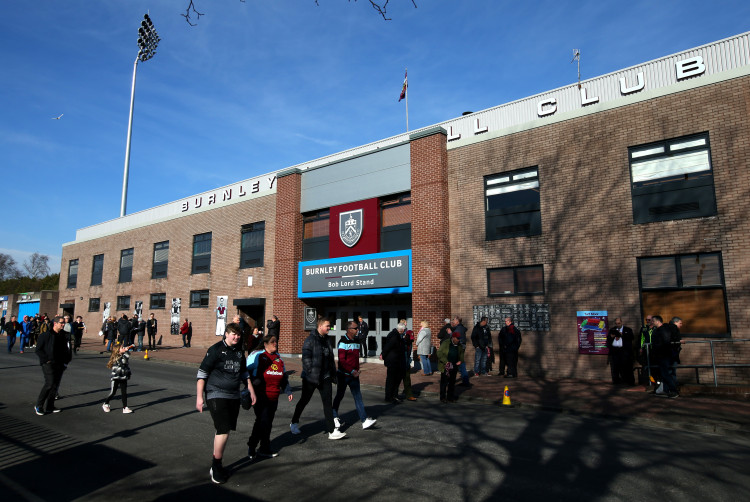
Burnley vs Wolves at Turf Moor on Friday will feature two teams desperate to secure three points after frustrating results in the EFL Championship earlier this week.
Burnley let a 2-1 lead at Charlton Athletic disappear with the final kick, while Wolves were beaten 3-1 at home by Bolton Wanderers after turning possession into very little danger. That makes this a meeting between a side desperate to stop a long home drought and visitors trying to recover their promotion momentum without exposing themselves again.
A point would keep both campaigns alive, but the match carries greater emotional weight for Burnley because another home failure would deepen the pressure around their survival fight. For the home side, the result is meaningful rather than decisive. They remain in the relegation battle, and victory would improve their position without taking them clear of danger; a draw would at least halt the damage, while defeat would leave their recovery further behind the teams above them.
Their recent match at Charlton showed the familiar problem. The Clarets created enough to lead but could not protect it. Across their last five matches, they have scored nine and conceded seven, yet they still carries a 13-game winless run and has not won a home league match for 360 days. Nicky Hayen needs a more assertive performance, but the late collapses have made every defensive phase feel costly.
Wolves, on the other hand, are chasing a different prize. Their promotion target remains possible despite the recent slip-ups, so Cesar Peixoto does not need to turn this into an uncontrolled away game. However, two losses in their last five and the defeat to Bolton have shaken confidence. At Molineux they had 19 shots but only three on target, a clear sign that their control was not supported by finishing quality.
Their recent five-match record is less productive in front of goal than the chance creation suggests, with five goals scored and six conceded. Burnley must attack because of their situation; Wolves can seek the win while protecting the draw. The absence of Enso Gonzalez and the doubt over Rodrigo Gomes reduce their wide options, which should encourage a measured rather than reckless approach.
Burnley are expected to use their regular 4-2-3-1 formation vs Wolves, with Gregoire Coudert likely to continue in goal behind Kyle Walker, Hjalmar Ekdal, Igor Julio, and Lucas Pires. The full-back selections matter to the plan. Pires has three assists and nine key passes in seven appearances, so his ability to advance is part of how Burnley intend to make the shape more aggressive.
The midfield unit should put Max Alleyne alongside Reo Hatate, with Josh Laurent ahead of them reprising the no. 10 role. Alleyne has played 836 minutes, giving him the continuity required to screen the centre, even though his recent form has dipped. Hatate is a more mobile partner, with one goal and two assists in six appearances, while Laurent supplies the link behind the striker and has eight key passes.
Jacob Bruun Larsen should start from the left wing, with Largie Ramazani on the right and Jamie Vardy through the middle. Bruun Larsen has two goals, two assists, and five big chances created, and Ramazani has added two goals, one assist and 1.66 expected goals. Vardy is the more uncertain attacking call, with Armando Broja the alternative to lead the line.
Burnley will be without Zeki Amdouni, who has been ruled out by an ankle injury, while Dastan Satpaev is returning from a hamstring problem under medical restrictions from Chelsea. Nearly a dozen other players remain unavailable, Amdouni’s absence removes another attacking option, increasing the importance of Bruun Larsen and Ramazani for width and chance creation.
Probable Burnley Starting Lineup (4-2-3-1): Coudet; Walker, Ekdal, Julio, Pires; Alleyne, Hatate; Ramazani, Laurent, Bruun Laursen; Vardy
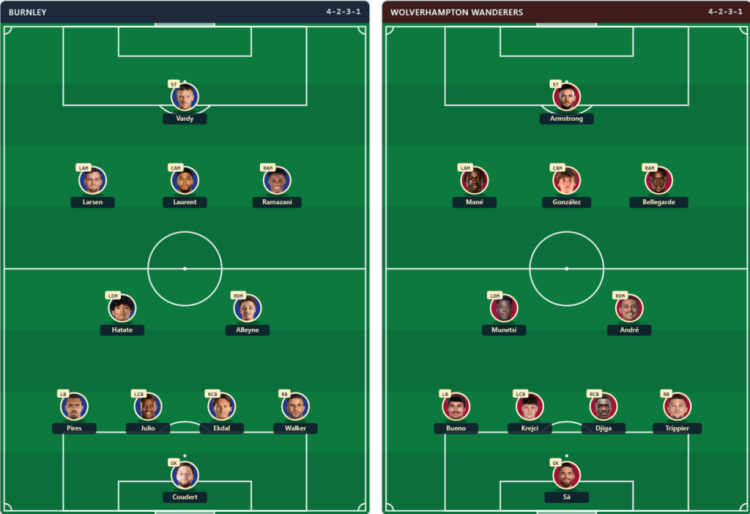
Probable Wolves Starting Lineup (4-2-3-1): Sa; Trippier, Djiga, Krejci, Hugo Bueno; Andre, Munetsi; Bellegarde, Lopez, Mane; Armstrong
Wolves should also line up in a 4-2-3-1 setup vs Burnley. Josa Sa starts behind Kieran Trippier, Nasser Djiga, Ladislav Krejci, and Hugo Bueno, with Andre and Marshall Munetsi expected to form the double pivot in the middle of the park. Krejci has made three starts and carries a 7.36 average rating, while Trippier has supplied ten key passes in five appearances despite having no goal involvement.
Munetsi has started eight times and scored twice, although his recent form has been below his earlier level. Fer Lopez is the central creator, supported by Mateus Mane and Jean-Ricner Bellegarde, with Adam Armstrong leading the line. Fer Lopez has four goals, two assists, and 15 key passes, making him the most productive attacking midfielder in either projected XI.
Wolves are missing Enso Gonzalez, Boubacar Traore, Raul Jimenez, and Bertrand Traore, while Rodrigo Gomes is doubtful after a foot injury sustained at Middlesbrough. The wide absences explain the expected use of Mane and leave Bellegarde’s position less secure. Still, Wolves have used this formation consistently, and the two holding midfielders should allow them to keep possession without committing every player forward.
Burnley’s 4-2-3-1 system is designed to let them attack with four players ahead of the holding pair while keeping enough central protection to avoid another passive home display. They average 17 shots per match against a league typical 13.25, while Wolves average 16. Burnley therefore tend to seek attempts rather than wait patiently, and their front-foot approach should bring Jacob Bruun Larsen, Largie Ramazani, and Lucas Pires into the game early.
Wolves’ version of the same shape is more controlled. They average 55% of the ball against a league typical 49.25%, while Burnley average 48% against that same benchmark. The away side’s lower directness, at 48 long balls per match compared with Burnley’s 54, also points to a side more willing to build through the midfield rather than bypass it.
Their 18 dribbles per match against the league’s average figure of 12 gives them another way to move beyond the first defensive line, while Burnley average 14. The likely pattern is clear. Wolves try to establish possession and bring Fer Lopez into the space behind Josh Laurent, while Burnley look for Pires and the two wide attackers to turn that pressure into forward running.
That difference creates the first system-level question. If Wolves’ double pivot can circulate the ball cleanly, Burnley’s attacking midfield line may be forced deeper and the home side’s aggressive plan will lose its shape.
If Burnley press successfully and keep Max Alleyne and Reo Hatate connected, they can attack without abandoning their cover. Wolves are prepared to pursue the win but accept a draw, whereas The hosts should carry more initiative while still keeping two midfielders behind the ball. The most important duel is Max Alleyne against Fer Lopez.
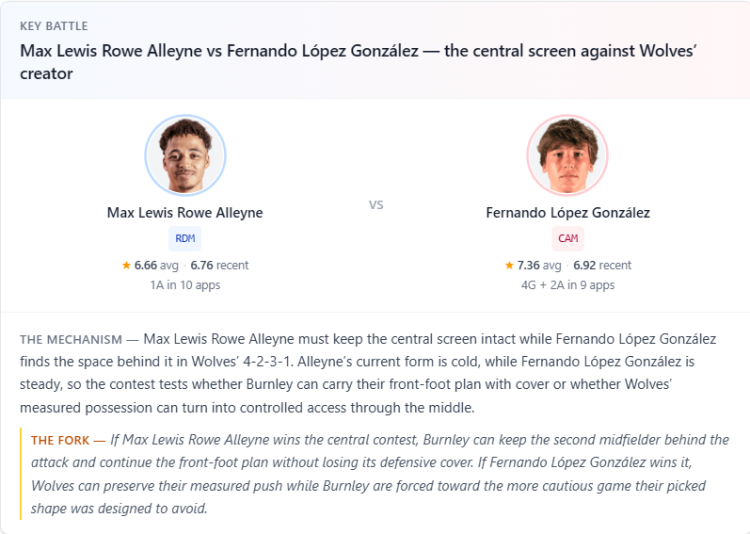
Alleyne must protect the space in front of the centre-backs; Lopez is the player most likely to receive between the lines and convert Wolves’ possession into forward access. The Spanish playmaker arrives with the steadier recent level, while Alleyne has looked short of his best, so the central contest favours Wolves if the Burnley screen becomes disconnected.
But Alleyne does not need to dominate the entire midfield. If he keeps Lopez from turning, Burnley can leave the second midfielder behind the attack and sustain their forward plan. If the Wolves talisman wins that space, Burnley may retreat into the cautious game their shape was meant to prevent.
The wide duel between Lucas Pires and Kieran Trippier offers a different mechanism. Pires must stretch Wolves’ right side and give Burnley an outlet when the visitors control the centre; the veteran right-back’s job is to contain that movement without pulling the back four apart. Should Pires gain ground, Burnley can keep their width and pressure while Hatate and Alleyne remain as cover.
If Trippier handles the channel, Wolves can preserve their compact structure and make Burnley attack through a narrower route. There is also a dead-ball danger for the home side. Wolves produce 0.669 expected goals from set pieces per match against a league typical 0.253, while Burnley produce 0.145 against that same figure.
Burnley’s midfield screen must therefore defend more than open-play access; unnecessary fouls around the box would give Wolves a route to threaten without having to break through the central block. Wolves average 102 combined ground and aerial contests against the league’s 97.75, so the game could become physical even while they try to control possession.
We predict a draw, albeit with low confidence. Both sides use the same basic structure, and the decisive spaces are contested rather than clearly owned. Wolves have the cleaner route to control through possession and set pieces, while Burnley have the home urgency and enough shooting volume to punish any defensive hesitation. The balance points towards neither side creating a sustained advantage.
The strongest case against the draw is a Wolves win through dead balls or Fer Lopez’s movement between the lines. Burnley’s recent defensive aggregate shows 1.53 xGA per match, compared with 1.06 for Wolves, so the visitors have the more convincing defensive platform. If the hosts concede territory, foul too often or lose the central screen, Wolves can score without needing to turn the game into an open exchange.
The opposite danger is that Burnley’s width forces Kieran Trippier and Hugo Bueno deeper, allowing the home side to build enough pressure for a narrow victory. The likely scoreline range is 1-1, 0-0 or 2-2.
The safest pick is a match decided by one moment rather than a clear superiority, with Wolves’ controlled approach limiting the chaos Burnley need and the home side’s need to play forward preventing the visitors from simply settling into a sterile away performance.
The selection that can still alter the contest is Burnley’s option to move into a 4-4-2 late on if they need a second central forward. That change would sacrifice one layer of midfield protection but could give Wolves’ centre-backs a more direct problem and turn a controlled draw into a stronger final push.
It is a useful lever precisely because the starting 4-2-3-1 is built to preserve cover; Burnley can decide in the closing phase whether the point is enough or whether the extra striker is worth exposing the centre.
