
Iraq and Norway will both make long-awaited returns to the FIFA World Cup when they meet at Boston Stadium on Tuesday night in their opening Group I fixture.
For Iraq, this is only their second appearance at the tournament and their first since 1986. For Norway, it is a return after 28 years away from the global stage, with Stale Solbakken’s side arriving with one of the most exciting attacking units in the competition.
With France and Senegal also in Group I, this opener already feels hugely important. Both Iraq and Norway will know that falling behind early in such a competitive section could make qualification extremely difficult. Norway will enter as favourites, but Iraq’s journey to the tournament has been built on resilience, organisation and the belief that they can make life uncomfortable for stronger opponents.
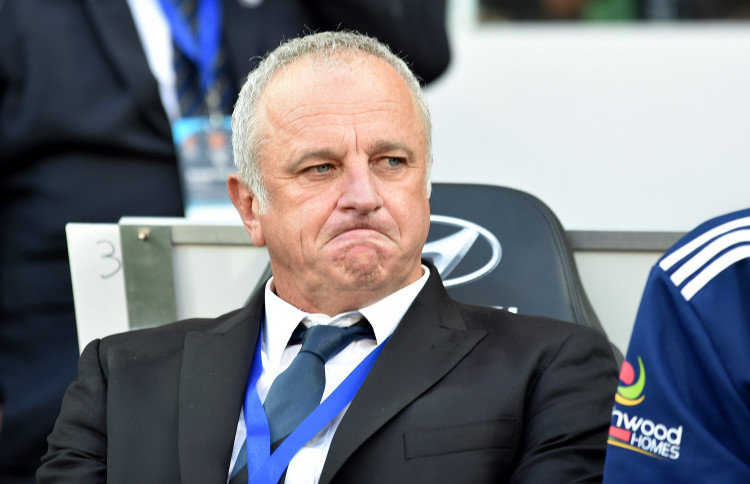
Iraq’s qualification story was anything but straightforward and at one stage, their World Cup hopes looked in real danger, with the national federation dismissing Jesus Casas after a defeat to Palestine in March 2025. Graham Arnold was appointed two months later and inherited a squad still fighting for survival in the AFC qualifying process.
The former Australia manager then oversaw a remarkable turnaround as Iraq navigated the third, fourth and fifth rounds of Asian qualifying before reaching the inter-confederation playoffs. Their place in North America was finally secured with a 2-1 victory over Bolivia in March, sending Usood al-Rafidayn back to the World Cup for the first time in 40 years.
Arnold has since spoken about the psychological and logistical challenges around his team’s campaign, stressing the need for unity and mental resilience as his side prepare to face one of the tournament’s toughest groups. This is only Iraq’s second World Cup appearance.
Their first came in Mexico in 1986, when they lost all three group matches against Paraguay, Belgium, and Mexico, scoring just once. Four decades later, the objective is not only to compete but to show that this team can perform with discipline and pride on the biggest stage.
Norway arrive in Boston with a very different kind of expectation as their qualification campaign was exceptional, especially given that they were drawn in a group containing Italy. Solbakken’s side won all eight matches, collecting 24 points from 24, scoring 37 goals and conceding only five. Captain Martin Odegaard has dismissed recent fitness concerns and confirmed he is ready for the opener, while Solbakken has also indicated that Erling Haaland is fit and sharp.
The return of Norway to the World Cup is a major moment for a country that last appeared at the tournament in 1998. On that occasion, they progressed from the group stage before losing 1-0 to Italy in the round of 16. Nearly three decades later, this new generation will want to go further.
However, Norway’s warm-up results have been mixed. Since the end of qualifying, the Red, White, and Blue have lost 2-1 to the Netherlands, drawn with Morocco and Switzerland, and beaten Sweden 3-1. Those results suggest that while their attacking ceiling is high, they still need to show tournament consistency.
This will be the first senior international meeting between Iraq and Norway, which adds an extra layer of intrigue. There is no direct head-to-head history to draw from, but the tactical picture is fairly clear. Norway will be expected to dominate possession, push Iraq back and look to create chances through Odegaard’s passing and Haaland’s movement. Iraq will aim to slow the rhythm, stay organised and attack quickly when Norway leave spaces. The Hard Tackle takes a look at how both sides could line up and what tactics they might employ on the day.
There are no major injury or suspension concerns reported for Iraq ahead of Tuesday’s Group I fixture. That should allow Graham Arnold to select a settled side, although the challenge will be tactical rather than selection-based. Against a Norway team with serious attacking quality, they will need to stay compact, protect central spaces and defend with concentration for long spells.
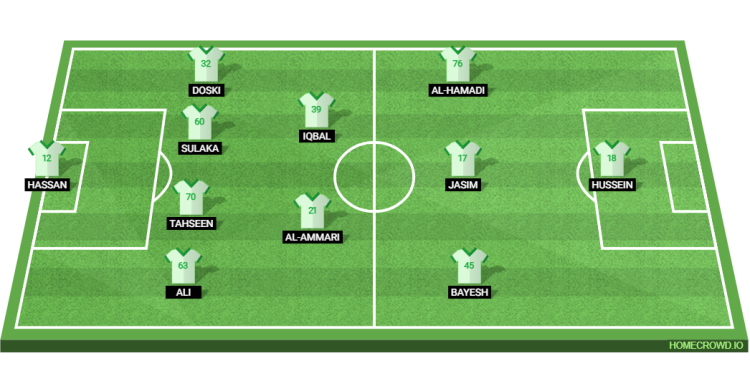
Iraq are expected to line up in a 4-2-3-1 formation, with Jalal Hassan starting in goal. Hussein Ali should operate at right-back, where he will need to balance defensive responsibility with occasional support in transition. Zaid Tahseen is likely to start as one of the centre-backs, with Rebin Sulaka expected to partner him in central defence, while giving Merchas Doski should feature at left-back.
In midfield, Amir Al-Ammari is expected to start as part of the double pivot. His defensive discipline, work rate and ability to retain possession under pressure will be important. Zidane Iqbal should partner him in central midfield, offering technical quality, ball progression and composure when Iraq try to play through Norway’s press.
Up forward, Ibrahim Bayesh is likely to start on the right side of the attacking midfield line, where his pace and direct running can give Iraq a useful outlet. Ali Jasim should operate centrally as the number 10, linking midfield with attack and trying to find space between Norway’s lines. Ali Al-Hamadi is expected to start from the left, where his movement and physicality can help Iraq transition quickly. Aymen Hussein should lead the line as the central striker.
Probable Lineup (4-2-3-1): Hassan; Ali, Tahseen, Sulaka, Doski; Al-Ammari, Iqbal; Bayesh, Jasim, Al-Hamadi; Hussein
Norway are expected to name a strong attacking side for their World Cup opener against Iraq, with Erling Haaland leading the line. There are no major injury or suspension concerns reported for Norway ahead of Tuesday’s Group I fixture. That should allow Stale Solbakken to select something close to his strongest available XI, with the focus likely to be on starting quickly and making the most of their attacking superiority.
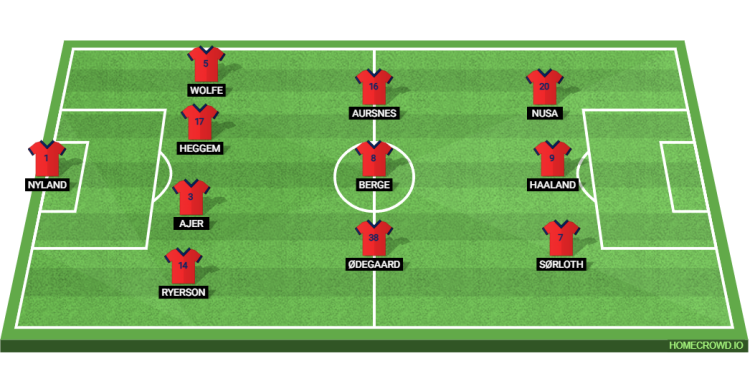
The Red, White, and Blue are expected to line up in a 4-3-3 formation, with Orjan Nyland starting in goal. Julian Ryerson should operate at right-back, while Kristoffer Ajer and Torbjorn Heggem could start in central defence, while David Moller Wolfe ties down the left-back spot.
In midfield, Martin Odegaard should operate on the right side of the central three, where he can drift into advanced areas and dictate Norway’s attacking rhythm. Sander Berge is expected to play centrally, offering ball progression and control in possession. Fredrik Aursnes should complete the midfield unit, bringing work rate, and support in both defensive and attacking phases.
In attack, Alexander Sorloth is likely to start on the right side of the front three, although he can also move centrally when Norway attack the box. Erling Haaland should lead the line as the central striker, where his movement, power and finishing will make him Iraq’s biggest concern. Antonio Nusa is expected to start from the left wing, giving Norway pace and a direct 1v1 threat.
Probable Lineup (4-3-3): Nyland; Ryerson, Ajer, Heggem, Wolfe; Odegaard, Berge, Aursnes; Sorloth, Haaland, Nusa
Norway return to the tournament for the first time since 1998, and much of the excitement around their campaign is built around Haaland’s presence. He was outstanding during qualification, helping Norway complete a perfect campaign with his ruthless finishing and constant penalty-box threat.
Operating as the central striker in Norway’s 4-3-3 system, Haaland should be supported by Martin Odegaard, Antonio Nusa and Alexander Sorloth. Odegaard’s passing from midfield could be especially important, as Iraq are likely to defend deep and restrict space around the box. If Norway can move the ball quickly and create openings between the lines, Haaland’s movement and finishing could prove decisive.
Iraq will need to stay compact and protect their centre-backs, but keeping Haaland quiet for 90 minutes is one of football’s toughest assignments. If he gets regular service, Norway should have a strong chance of beginning Group I with three points.
Iraq’s organisation and emotional motivation should make them competitive, especially if they can frustrate Norway in the early stages. However, the gap in attacking quality is difficult to ignore. With Erling Haaland leading the line and Martin Odegaard controlling the creative rhythm, Norway should have enough to break Iraq down and begin Group I with a valuable win.
