
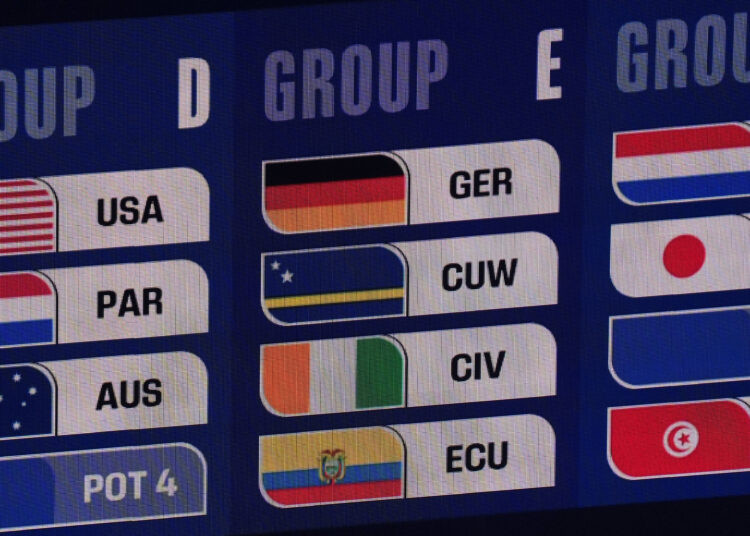
The Hard Tackle takes a closer look at Group D of FIFA World Cup 2026, where the USA, Paraguay, Australia, and Turkey collide.
The 2026 FIFA World Cup arrives with a different rhythm to past editions: an expanded format, venues across three nations, and a sense that the tournament’s narrative will be written in many homes and pockets from Vancouver to Mexico City.
Expectations are magnified for co-hosts and newcomers alike. Every group match now carries extra weight because the expanded field creates novel pathways through to the round of 32. In that context, Group D presents a compelling blend, the USA as one of the host nations and a team under fresh stewardship; a resolute South American dark horse in Paraguay; a familiar, battle-hardened Australia; and Turkey, riding the crest of a new generation.
At first glance, the group looks like a comfortable road for the hosts. However, international tournaments reward momentum and tactical clarity more than reputation. The four teams bring contrasting identities: the USMNT’s potential and inconsistency, Paraguay’s low-risk outlook, Australia’s organised resilience under Tony Popovic, and Turkey’s youthful technical fluency under Vincenzo Montella. That diversity promises tight contests and makes Group D one to follow closely, especially as form, strategy and key individuals will likely decide who progresses.
As co-hosts, the United States did not pass through a qualifying gauntlet, which leaves their recent match record as the chief gauge of readiness. Over the last year the USMNT produced mixed results — nine wins, two draws and six defeats — reflecting an uneven run of form. Mauricio Pochettino’s tenure so far has been instructive but inconclusive: he has pedigree in knockout competitions at club level, yet his record with the national side shows nine losses in 25 matches. Those numbers underline an uneasy truth: the squad has talent and profiles of match-winners, but lacks consistent team balance and a decisive identity in tight games.
What will define the US campaign in the group is how quickly Pochettino imposes his tactical blueprint. The emphasis is likely to lie in compact defensive structure combined with possession management and transitional speed in attack. Against Paraguay and Turkey — compact, technically adept opponents respectively — the hosts must avoid lapses of concentration and recognise when to seize control of tempo. Home advantage matters, but only if the team converts it into coherent performances.
Christian Pulisic remains the most recognisable attacking figure in the squad and, on his day, the player capable of producing a match-defining moment. Statistically, over recent seasons Pulisic has been the US’s most consistent creative outlet in the final third: high progressive carries, chance-creating actions and a reliable goalscoring presence relative to the rest of the pool. The onus will be on him to produce end-product in high-leverage moments — not merely to dribble past defenders, but to convert or create decisive chances when matches are on the line.
Weston McKennie is the midfield metronome Pochettino needs for control and balance. His statistical profile shows strong ball recoveries, aerial presence and an ability to link defence to attack — traits that translate well into tournament football where structure is vital. In tight contests McKennie’s pressing and passing range will determine whether the US can manage games, suppress opposition transitions and exploit set-piece or late-break opportunities. If McKennie controls the midfield exchanges, the US stands a far better chance of advancing.
Paraguay returned to the World Cup after a 16-year absence by securing sixth in the CONMEBOL table — a stout accomplishment in one of the planet’s toughest qualifying pools. Their campaign was uneven early on, failing to win six of their first seven games, before a resolute turnaround that included a shock 1-0 win over Brazil. Defensively they were exemplary: only Ecuador conceded fewer goals in the qualifiers. Yet the side also struggled for goals, failing to score in eight matches, which highlights a trade-off at the heart of their identity.
Gustavo Alfaro’s set-up — usually 4-2-3-1 or a pragmatic 4-4-2 — prioritises organisation and risk aversion. The result is a unit that is difficult to break down, compact between the lines and disciplined in defensive transitions. That makes Paraguay a dangerous opponent in low-scoring knockout-style ties, but it also raises questions about their capacity to dominate sustained possession or to outscore technically superior teams in open play. In Group D their approach should frustrate attackers and could earn them points, but it may also leave them short of the firepower needed for a top-two finish.
Miguel Almiron has carried much of Paraguay’s attacking expectation. His capacity for progressive runs, high-intensity pressing and chance involvement makes him the natural outlet in the final third. Statistically, Almiron stands out for his dribbling success in advanced areas and his propensity to generate counter-attacking opportunities; he will need to translate these traits into goals or high-value chances against compact opponents.
Omar Alderete anchors the defensive unit. His aerial reliability, interception rates and disciplined positioning were vital during qualification, and they will be central to Paraguay’s plan to frustrate opponents. Alderete’s concentration and ability to marshal a low block will determine how effectively Paraguay restricts sustained pressure, and whether they can spring the odd, decisive counter.
Australia’s route to Canada–Mexico–USA 2026 was characteristically rugged. The Socceroos extended their record run of World Cup appearances to six by topping Group I in the second round and finishing second behind Japan in the third round. The campaign began erratically.
A shock home defeat to Bahrain and a draw with Indonesia precipitated the departure of Graham Arnold. However, Tony Popovic’s arrival reoriented the team. Popovic introduced a disciplined, high-intensity defensive shape that sparked an eight-match unbeaten run and included a famous away win over Japan in Perth.
Australia have evolved into a compact, hard-to-break unit with a balanced mixture of experienced heads and emerging talent. Popovic’s tactical focus has been on structure, pressing in waves and quick counter transitions; that makes the Socceroos dangerous in narrow contests and a tough fixture for teams unprepared for physical, organised resistance.
Nestory Irankunda injects raw, explosive attacking threat. His pace, trickery and willingness to take on defenders make him a match-winner in transition; statistically he registers high progressive carries and successful take-ons, traits that can unpick teams set to defend deep. His celebration style and charisma also make him a focal point — both on and off the ball — for Australia’s attacking intentions.
Mathew Ryan, despite being in the twilight of his career, remains the stabilising presence between the posts. His shot-stopping, command of the penalty area and experience in pressure situations give Australia a reliable last line. Ryan’s ability to make key saves and organise the defence could be decisive in keeping the Socceroos competitive in tight games and earning crucial points.
Turkey ended a 24-year absence to reach the World Cup, a milestone achieved by finishing second in a UEFA group behind Spain and then navigating tense playoffs with narrow 1-0 wins over Romania and Kosovo. Vincenzo Montella has fashioned a side that feels modern and attack-minded, blending technical youngsters with seasoned operators. Their qualification was built on tactical clarity: well-drilled pressing, fluid attacking patterns and an emphasis on technical ability in the final third.
This is a side that balances youthful exuberance with tactical discipline, making them difficult to predict and dangerous on their day. Their frontline and creative midfielders can produce moments of brilliance that change games quickly, which is why they arrive in Group D with genuine ambition.
Arda Guler operates as the creative fulcrum, a player who can unlock defences with progressive passes and incisive movement. His vision and ability to find pockets between lines make him Turkey’s chief chance-provider. Kenan Yildiz brings direct attacking threat; his recent club season (with 20 goal contributions for Juventus) underlines his capacity to produce end-product and stretch defences. Hakan Calhanoglu provides the midfield orchestration and leadership, combining set-piece quality with passing range and experience, an essential stabiliser in a young, energetic set-up.
Group D shapes up to be competitive, but the combination of Turkey’s technical fluency and the United States’ home advantage makes them the two most likely to progress. Turkey’s energetic, skilful cohort can top the section: Montella’s side possesses the kind of match-winners who can decide tight contests and an attacking balance that should trouble Paraguay and Australia. The USA should finish second. Pochettino’s team will rely on home support and the ability to steady the ship in tight moments; if Pulisic and McKennie perform to expectation and the manager tightens defensive cohesion, the hosts should take the other automatic spot.
Paraguay look best placed to finish third. Their defensive solidity makes them hard to beat and keeps them in games, but their lack of goals restricts their ceiling and could leave them dependent on favourable results elsewhere if they aim for a round-of-32 berth as one of the best third-placed teams. Australia, revitalised under Popovic but still limited in attacking depth compared to the others, are the outsiders in this quartet and are forecast to finish fourth.
