
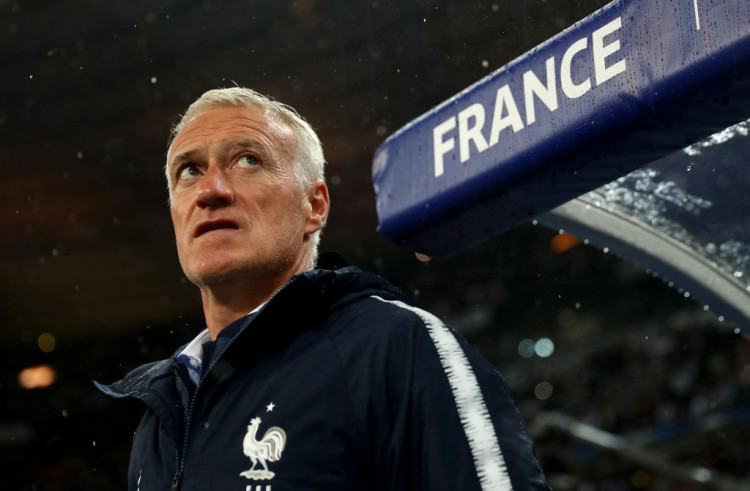
A high-quality international friendly awaits in Washington DC as Colombia national football team take on France national football team at Northwest Stadium.
With the 2026 FIFA World Cup fast approaching, both sides are entering the final phase of preparation and while this may officially be a friendly, the intensity and quality on display suggest something far closer to a competitive showdown.
France arrive in the United States in excellent form and with a clear sense of direction under Didier Deschamps. Their recent victory over Brazil was more than just another friendly win. Against elite opposition, Les Bleus showed control, efficiency and depth, even overcoming adversity after going down to ten men. That result extended their unbeaten run to eight matches, underlining the consistency that has made them one of the favourites heading into the World Cup.
At the heart of their attacking threat remains Kylian Mbappe, who continues to edge closer to the all-time scoring record held by Olivier Giroud. His movement, finishing and ability to change games in moments make him the focal point of France’s forward line.
But beyond individual brilliance, what stands out about this French side is balance. They combine defensive solidity with attacking variety, and Deschamps still has a wealth of options to rotate and evaluate before naming his final squad for what will be his last tournament in charge.
Colombia’s journey into this fixture has been slightly more turbulent but no less impressive over the longer term. Their defeat to Croatia last time out ended a year-long unbeaten run, a stretch that had re-established them as one of South America’s most dangerous sides. Even in that loss, they showed flashes of attacking quality, taking the lead early before losing control of the game before half-time.
Under Nestor Lorenzo, Colombia have developed into a team that blends physical intensity with attacking flair. They are capable of scoring against any opponent, and their ability to play at tempo can make them uncomfortable to face.
Having finished strongly in CONMEBOL qualifying, Colombia arrive at this World Cup cycle with genuine belief. This fixture, however, represents a step up in class, and a valuable opportunity to test themselves against one of Europe’s elite.
France are likely to approach the game with composure and control. They are comfortable dictating possession, but equally dangerous when transitioning quickly through their attacking players. Their midfield structure allows them to manage tempo effectively, while their defensive organisation ensures they are rarely exposed for long periods.
Colombia, by contrast, are likely to play with greater intensity and directness. They will look to press in spells, disrupt France’s rhythm and create chances through quick attacking transitions. If they can turn the game into a more open, physical contest, they may increase their chances of unsettling Les Bleus.
The key question is whether Colombia can sustain that intensity without losing structure, because against a team like France, even small lapses are often punished. The Hard Tackle takes a look at how the teams could line up on the night and what tactics they might employ.
For Colombia, the main team news heading into this friendly revolves around a couple of notable absences, particularly in defence and attack. Veteran centre-back Yerry Mina is unavailable after an injury-disrupted period at club level, which means Colombia lose an experienced and physically imposing option at the back.
They are also without striker Jhon Duran, another significant absentee given the attacking depth and unpredictability he can offer in the final third. There are no major suspension concerns reported for Colombia ahead of this matchup, so Nestor Lorenzo’s selection issues are primarily injury and availability related rather than disciplinary.
On the positive side, captain James Rodriguez remains a central figure and is in line to make his 124th international appearance, moving closer to David Ospina’s all-time national team record. Colombia are also boosted by the availability of dangerous attacking players such as Luis Diaz and Luis Suarez, both of whom arrive with strong recent form and should carry much of the side’s creative and goalscoring burden.
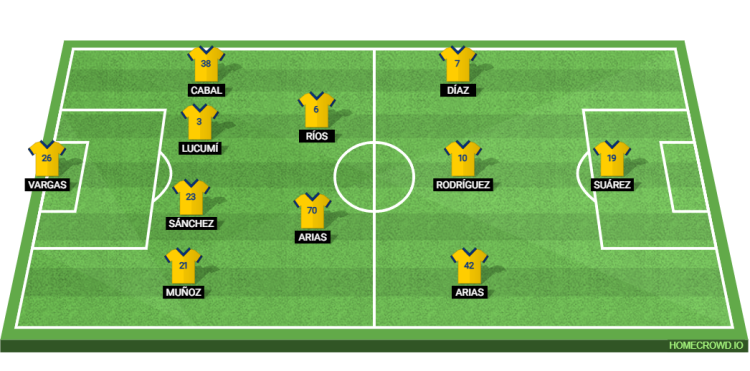
Tactically, Colombia are expected to line up in a 4-5-1 formation, although in possession it could often resemble a more flexible attacking shape depending on how high their wide players push. In goal, Camilo Vargas is likely to start and should once again provide experience and composure between the posts. At right-back, Daniel Munoz would ordinarily be a likely starter, but with fitness concerns around him, Colombia may need to manage that situation carefully; if fit enough, he brings energy, overlap and aggression down the flank.
In central defence, Davinson Sanchez and Jhon Lucumi are expected to form the core partnership, offering a blend of physicality, recovery pace and aerial presence. On the left side, Juan Cabal is likely to start and should provide defensive stability while also helping Colombia progress the ball out from the back.
In midfield, Colombia are likely to use Jefferson Lerma and Richard Rios as the deeper pair, with both expected to play a crucial role in screening the defence and helping the team compete physically against France’s strong central areas. Lerma should bring his usual aggression and ball-winning presence, while Rios offers mobility and energy in transitions. Ahead of them, Jhon Arias, James Rodriguez, and Luis Diaz are expected to operate as the more advanced midfield and wide attacking line.
Arias should provide direct running and work rate from one side, while Diaz is likely to be Colombia’s main source of explosiveness and one-on-one danger from the other. In the middle of it all, James will almost certainly be the side’s creative focal point, drifting into pockets of space and trying to dictate Colombia’s attacking rhythm with his passing and vision.
Up front, Luis Suarez is expected to lead the line as the lone striker. His recent scoring form has given Colombia an added edge in attack, and he should be relied upon to occupy defenders, attack crosses and make the most of any openings that arise against a high-level French defence.
Probable Lineup (4-5-1): Vargas; Munoz, Sanchez, Lucumi, Cabal; Lerma, Rios; Jhon Arias, Rodriguez, Diaz; Suarez
For France, Didier Deschamps continues to work with a squad overflowing with quality, but there are still a few notable absentees that affect the shape of his selection ahead of this friendly. Manu Kone, Jules Kounde, and Bradley Barcola are all unavailable, leaving France without several players who could easily have started in a fixture of this level. Their absence slightly reduces options in midfield, defence and wide attacking areas, although it also opens the door for others to stake a claim before the World Cup.
There are no major suspension concerns reported for France going into this match, so the main focus is on rotation and squad management rather than disciplinary issues. One player who has already taken advantage of that situation is Hugo Ekitike, who stepped in effectively in the previous outing and now has a strong chance of featuring again.
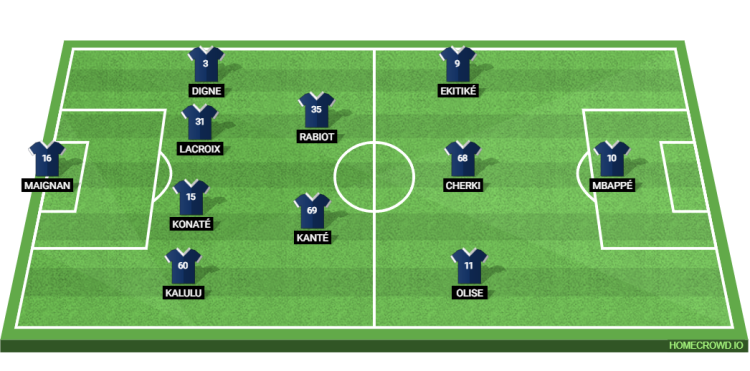
France may also use this opportunity to hand valuable minutes to players on the fringes of the strongest XI, particularly with the squad now entering the final phase of World Cup preparation. Tactically, France are expected to line up in a 4-2-3-1 formation, a setup that should allow them to remain compact in midfield while also giving their attacking players plenty of freedom in the final third. In goal, Mike Maignan is likely to start and should once again provide calmness, authority and excellent distribution from the back.
At right-back, Pierre Kalulu is expected to feature and will bring athleticism and defensive mobility, while Ibrahima Konate and Maxence Lacroix are likely to form the central defensive partnership. Konate offers physical dominance and recovery speed, while Lacroix should provide energy and composure in possession. On the left side, Lucas Digne is expected to start and will be relied upon to contribute width and crossing support whenever France move into advanced areas.
In midfield, N’Golo Kante and Adrien Rabiot are likely to operate as the double pivot. Kante should provide his trademark ball-winning ability, positional awareness and energy between the lines, while Rabiot offers control, progressive carrying and a stronger physical presence when France are trying to dominate central spaces. Together, they give France a balanced midfield base capable of protecting the defence while also helping the side control the rhythm of the game.
Ahead of them, France are expected to use Michael Olise on the right, Rayan Cherki in the central attacking midfield role, and Hugo Ekitike from the left side of the attacking line. Olise should offer technical quality, close control and creative delivery from the flank, while Cherki is likely to be given the freedom to drift into pockets of space and connect midfield with attack through his flair and invention.
Ekitike, meanwhile, could again play an important role with his movement, direct running and ability to attack spaces across the front line. Leading the attack, Kylian Mbappe is expected to start as the central striker and will once again be France’s main attacking reference point.
Whether through his movement in behind, his finishing, or his ability to create chances for others, he remains the player most capable of deciding the match. Overall, France’s likely setup suggests a side that should still have more than enough technical quality, pace and structure to control long periods of this game, even if Deschamps chooses to rotate some of his more established names.
Probable Lineup (4-2-3-1): Maignan; Kalulu, Konate, Lacroix, Digne; Kante, Rabiot; Olise, Cherki, Ekitike; Mbappe
Hugo Ekitike could be one of the most intriguing figures on the pitch when France face Colombia, especially in a match that may offer him another valuable chance to strengthen his case ahead of the World Cup.
France are blessed with extraordinary attacking depth, which means every opportunity in a game like this carries real significance. For Ekitike, that makes this more than just another friendly appearance. It is a chance to show Didier Deschamps that he can be more than a rotation option and that he is capable of making a genuine impact against strong international opposition.
His performance against Brazil should already have caught the manager’s eye. He stepped in effectively, took his goal well, and showed the kind of movement that can make life uncomfortable for defenders. What stands out most about Ekitike is that he offers France a slightly different attacking profile compared to some of their other forwards. He is mobile, sharp in transition, and comfortable drifting across the front line, which gives France added fluidity when they attack.
That could be particularly useful against Colombia. Nestor Lorenzo’s side are likely to be compact and aggressive through midfield, which means France may need clever movement rather than just raw possession to break them down. Ekitike’s ability to find spaces, stretch the defensive line and link with runners around him could make him a very useful weapon in that kind of tactical battle.
There is also a strong possibility that France rotate parts of their attack again, and that should hand Ekitike another platform to influence the game. If he can combine effectively with players such as Kylian Mbappe, Rayan Cherki, and Michael Olise, he could be at the centre of much of France’s attacking rhythm.
This should be one of the more entertaining friendlies of the weekend, with both Colombia and France carrying enough attacking quality to make it a lively contest.
Colombia are unlikely to make life easy for Les Bleus. They have enough energy, physicality and attacking threat to stay competitive, particularly if players like Luis Diaz, James Rodriguez, and Luis Suarez are able to find rhythm in transition. Their midfield structure should also help them remain compact for periods and prevent France from dominating too easily.
That said, France still look like the more complete side. Even with some rotation and a few absentees, Didier Deschamps can still call upon an extraordinary level of depth, and that often proves decisive in games like this. Their balance, athleticism and attacking quality should allow them to create better chances over the course of the match.
Colombia may well have their moments, but France’s superior control and quality in decisive areas could ultimately make the difference.
